
Keeping an older family member safe in the kitchen does not require a remodel or a stack of expensive gear. Small changes in layout light and storage can cut risk and make daily tasks easier for someone with limited mobility slower reflexes or mild memory loss. This article offers clear practical steps you can take right away to reduce slips burns and confusion and to help your loved one keep cooking when they want to.
Read on for room by room tips clear examples and a list of useful products that fit common budgets. Each recommendation focuses on common hazards and on how a few intentional choices reduce accidents while preserving independence and dignity.
Common kitchen hazards for older adults and why they matter
Falls and burns are the leading kitchen problems for older adults. Tripping over loose rugs reaching for a high pan or handling a hot pot can lead to serious injuries. Reduced vision and diminished grip strength increase the chance of spills and dropped items. Slow reaction times make it harder to respond quickly to a scorch or spill. Identifying which risks are present in a specific kitchen is the first step toward making changes that work.
- Slippery surfaces from spills or polished tile
- Poor lighting that hides steps edges or stove controls
- Cabinets placed too high forcing unstable reaching
- Sharp edges and unstable stools that shift underneath someone
- Forgotten burners that are still on after a pot is removed
Lighting and visibility improvements that make a difference
Good lighting helps with everything from reading labels to judging how hot a pan is. Replace dim bulbs with bright full spectrum bulbs that match existing fixtures. Add task lighting under cabinets above work surfaces and consider sensor night lights for the path between kitchen and bedroom.
Task lighting at work areas
Install under cabinet LED strips to eliminate shadows on counters. Place a bright lamp near frequently used areas such as the cutting board and the stove so that an older person can see clearly when handling knives or adjusting heat. Use bulbs rated at 3000 to 4000 Kelvin for a natural white light that improves contrast.
Night lighting and motion sensors
Motion activated lights are useful for late night trips to the kitchen. Small rechargeable puck lights inside the pantry and near the refrigerator provide just enough light to find a snack without turning on bright ceiling fixtures. This reduces the risk of bumping into objects in low light.
Flooring layout and fall prevention strategies
Falls cause major injuries. Flooring choices and how you use the floor space can lower that risk. Swap slick rugs for low profile non slip mats and remove clutter from pathways. A simple rearrangement of furniture and small storage solutions can make the kitchen safer without reducing accessibility.
Flooring materials to prefer
Choose flooring that is firm but offers traction. Vinyl and textured tile are easier on joints and are less slippery when wet than polished ceramic. If replacing floor material is not possible add non slip runner strips or mats in front of the sink and stove. Attach mats with double sided tape to prevent sliding.
Clear pathways and storage placement
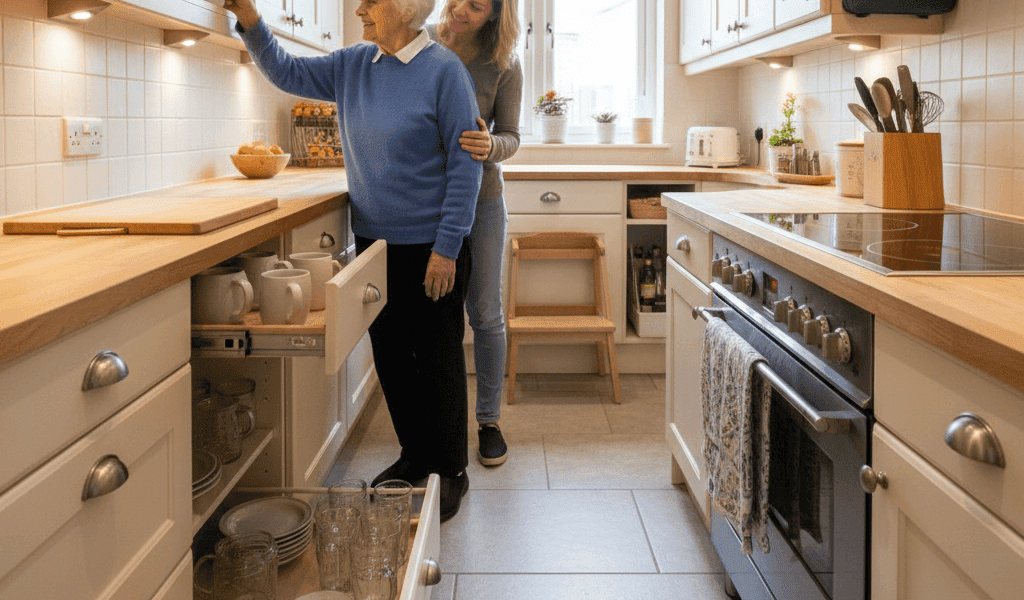
Keep the most used items at waist to chest height to reduce bending and reaching. Place everyday plates cups and frequently used utensils in lower cabinets or drawers that open smoothly. Reserve high shelves for seasonal items only. Create a clear walking line from the entrance to the main work area with no obstacles.
Stove and cooking safety tips that reduce burns
Many accidents start at the stove. Simple habits and a few tool swaps make cooking safer. Choose cookware with heat resistant handles use back burners when possible and add visual reminders for stove shutdown.
Safer cookware and control practices
Use pots and pans with long sturdy handles and lids that fit well. Consider pans with two handles for heavy dishes so weight is distributed. Magnetic visual markers on the stove knob can show which burners are on without reading small symbols. A stove top oven timer with loud audio helps when someone is engaged in conversation and may forget a pot on the stove.
Cooking routines and checklists
Create a short checklist to follow each time the stove or oven is used. Post it near the stove. A sample list might read
- Turn pot handles inward
- Set timer
- Keep a lid nearby for grease fires
- Turn off burners when finished
Practice the routine together a few times until it becomes habit.
Cabinet organization and appliance access that support independence
Organization reduces risky reaching and awkward movements. Pull out shelves or drawers cut down on bending. Use clear labels with large print for canisters and boxes. Arrange heavy items so they are at mid height and easy to slide out.
- Install lazy susans in corner cabinets to reach items without stretching
- Use pull down shelf hardware for high cabinets so items come to the user
- Place microwave at counter or lower built in level to avoid lifting hot dishes from overhead
- Choose cordless kettles with comfortable handles and automatic shut off
Small changes like placing often used appliances on a dedicated shelf reduce the number of times a person must carry a hot item across the room.
Fire prevention and emergency readiness for the kitchen
Preparing for worst case situations reduces harm. Have a clear plan for smoke or fire and practice it. Install a residential fire extinguisher rated for grease fires and show family members where it is stored. Test smoke detectors monthly and replace batteries at the same time each year.
- Keep a metal lid nearby to smother small pan fires
- Store a small Class B or multipurpose extinguisher in the kitchen within easy reach
- Teach the stop drop and roll routine if clothing catches fire
- Post emergency phone numbers and a simple map to the nearest exit on the refrigerator
Consider a monitored medical alert that includes a wearable fall sensor if there is a history of serious falls. A basic phone or a simple wrist button helps in case the person cannot get to a phone after a fall.
Practical products and small changes that have big impact
There are many products that reduce strain and prevent accidents without changing the look of the kitchen. Equipment such as jar openers non slip shelf liners a kettle with automatic shut off and textured grips on utensils all make tasks easier. For a thorough list of product recommendations and layout ideas related to senior kitchen safety check the linked resource which includes photos shopping tips and checklists.
- Non slip mats at sink and in front of stove
- Large print labels and color coded containers
- Lightweight cookware and silicone grips
- Countertop organizers that keep items at reach
Communication habits and simple routines that lower stress and risk
Habits matter as much as hardware. Set predictable meal times and maintain a short routine before cooking. For example a quick 60 second safety check before turning on the stove reduces errors. Speak with your loved one about what feels risky and what feels comfortable. Encourage short breaks during long tasks and offer to help with lifting heavy items.
- Use a shared checklist and post it at eye level
- Agree on a signal for help such as a bell or light
- Keep a small stool with a wide base to sit while prepping food
- Plan meals that require minimal stove time on days when energy is low
Simple planning limits the need to react fast in problematic situations and keeps fatigue from creating hazards.
Creating a safer kitchen for an older family member is a mix of preventing falls and burns improving visibility organizing smartly and preparing for emergencies. Start by observing current routines to find the highest risk tasks then prioritize changes that remove those risks with the least disruption. Small upgrades like brighter bulbs non slip mats and easy access storage reduce incidents immediately. Practice safety routines and keep communication open so the person using the kitchen remains comfortable and confident.
Take action today by making a short list of three things you can change this week. Replace dim bulbs move everyday items to waist height and add a single non slip mat in front of the sink. If you need more ideas use the linked resource for specific product suggestions and checklists. A few targeted steps now will lower the chance of injury and help your loved one continue to enjoy cooking and meals with family.